
The Green Ledger: Aligning Data Center Efficiency with Corporate ESG Mandates
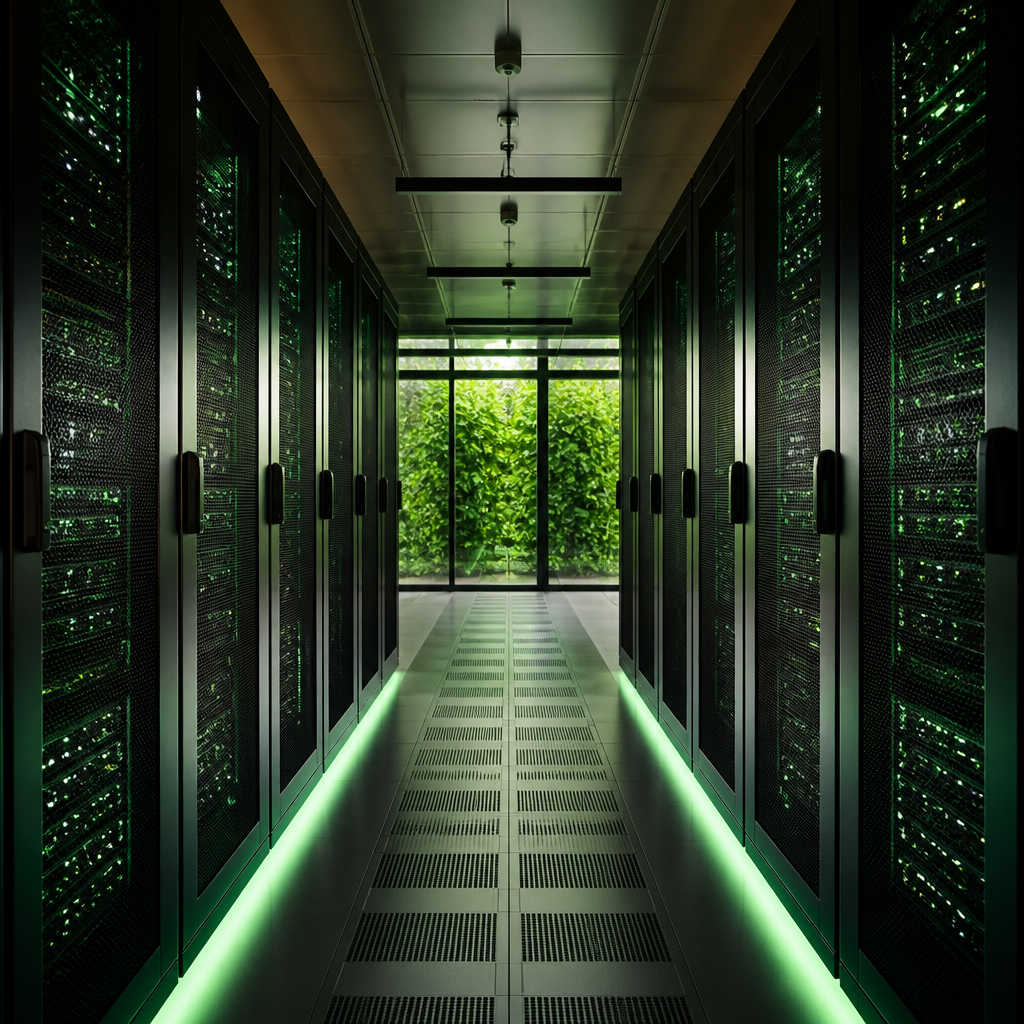
Aligning data center efficiency with corporate ESG mandates requires a strategic shift from passive reporting to active infrastructure optimization. By integrating high-density computing, liquid cooling, and renewable energy procurement, organizations can meet stricter global transparency requirements like the EU’s Energy Efficiency Directive while reducing operational overhead.
As organizations accelerate their digital transformation, the physical footprint of the cloud has become a central pillar of environmental, social, and governance (ESG) reporting. For technology leaders, the challenge is no longer just about maintaining uptime; it is about proving that every watt consumed contributes to a sustainable balance sheet. Global data center electricity consumption is projected to increase from 485 TWh in 2025 to 950 TWh by 2030, effectively doubling the industry's energy footprint in five years. This surge, largely driven by the tripling of AI-focused consumption, has placed a spotlight on the "Green Ledger"—the documented accountability of tech infrastructure.
The New Standards of Transparency
The era of self-selected sustainability metrics is ending. Regulatory bodies are moving toward mandatory, standardized disclosures that allow investors and regulators to compare facilities on equal footing. In Europe, the Energy Efficiency Directive has already implemented reporting for facilities with at least 500 kW of installed IT power.
Initial reporting cycles under these frameworks show an industry in transition. A European Commission report found that while the average Power Usage Effectiveness (PUE) stands at 1.36, only a small fraction of facilities currently engage in waste-heat reuse. For businesses, this means the "efficiency" of your provider is now a measurable part of your Scope 3 emissions.
Simultaneously, the Greenhouse Gas (GHG) Protocol is undergoing a significant update. The proposed revisions for Scope 2 market-based methods are exploring "Method 1" which incorporates hourly matching and deliverability. This would require companies to prove they are using clean energy at the exact time of consumption, rather than simply balancing an annual total.
Benchmarking Data Center Efficiency
To align with ESG mandates, firms must look beyond the simple PUE metric. Modern sustainability audits now incorporate Water Usage Effectiveness (WUE) and circular economy data. For example, Microsoft reported a global PUE of 1.17 and a WUE of 0.27 L/kWh for its FY2025 period, illustrating how location and climate impacts these figures.
Hardware lifecycle management is another critical component of the Green Ledger. Moving away from a "dispose and replace" mentality, leaders are adopting circularity. In 2024, Microsoft reported reusing or recycling 92% of decommissioned data center hardware, including over 3 million components. This shift reduces the "embodied carbon" of IT operations, a factor that is increasingly audited in ESG reports.
As you modernize your infrastructure, Gpenda Technologies Inc. provides the IT and cybersecurity services needed to ensure your systems remain both lean and resilient.
Operationalizing Efficiency: From Code to Cooling
Achieving data center efficiency is not solely the responsibility of the facility manager; it involves the entire technology stack. There are three core areas where businesses can take immediate action:
- Software Optimization: Inefficient code consumes more CPU cycles, which translates directly to higher power draw. "Green coding" practices—optimizing algorithms to reduce computational intensity—can significantly lower the energy required for the same business outcome.
- Infrastructure Density: Consolidating workloads through advanced virtualization or containerization allows for higher server utilization. Higher density reduces the amount of idle hardware, which often consumes significant power without delivering value.
- Renewable Procurement: Following the lead of major hyperscalers, businesses are moving toward net-new clean energy agreements. Google signed for over 12 GW of clean energy in 2025 alone, emphasizing that physical generation must keep pace with infrastructure growth.
The Security and Operational Intersection
Sustainability and security often share the same foundational best practices. A "lean" infrastructure is generally a more secure one. Excess, unmonitored hardware—often referred to as "zombie servers"—not only wastes energy but also broadens the attack surface.
From a security perspective, the push for transparency in the Green Ledger introduces new risks related to data exposure. ESG reporting requires the collection and movement of granular operational data. If the telemetry used to measure energy and water usage is not encrypted and segmented, it could provide adversaries with insights into facility layout or load patterns. Gpenda Technologies Inc. advises that ESG data pipelines must be integrated into the broader Zero Trust architecture of the firm.
Furthermore, as the IEA warns that concentrated loads can create electricity-affordability and reliability risks, businesses must build geographical redundancy into their disaster recovery plans to account for potential grid instability in high-density regions.
Future-Proofing the Tech Ledger
The next evolution of data center efficiency will likely involve proactive grid management. The IEA projects that 20–25 GW of battery storage will be installed in data centers by 2030, allowing facilities to act as stabilizers for the renewable energy grid.
For most businesses, the path forward involves auditing current cloud and colocation providers against these emerging standards. Ask for verified PUE/WUE reports and inquire about their hardware circularity programs. By aligning your technology decisions with your corporate sustainability goals, you ensure that your digital growth doesn't come at the expense of your ESG commitments.
Frequently asked questions
What is a good PUE for a modern data center?
While the global average is often cited around 1.5, top-tier hyperscale facilities and modern colocation centers aim for a Power Usage Effectiveness (PUE) of 1.2 or lower. A lower PUE indicates that more energy is going directly to the IT equipment rather than cooling and overhead.
How does AI affect data center energy consumption?
AI workloads require high-density power and specialized cooling. The IEA projects that AI-driven electricity consumption in data centers will triple by 2030, necessitating specialized infrastructure to maintain ESG compliance.
What is Water Usage Effectiveness (WUE)?
WUE is a metric that measures the ratio of water used for cooling and humidification to the electricity consumed by IT equipment. As water scarcity becomes a global concern, WUE is becoming as critical as PUE in corporate ESG disclosures.
Is Scope 2 reporting changing for businesses?
The GHG Protocol is currently consulting on updates that may move toward hourly matching of renewable energy. This would mean businesses must prove their clean energy purchases match their usage patterns in real-time, rather than just on an annual average.
If you are ready to modernize your infrastructure for efficiency and security, contact us to discuss your roadmap or start a request today.
Sources
- International Energy Agency — Key Questions on Energy and AI
- European Commission — Energy Performance of Data Centres
- GHG Protocol — Scope 2 Market-based Method Update
Facts checked against live sources on 2026-11-04.