
The Dark Fiber Risk: Securing Subsea and Terrestrial Infrastructure Assets
The Foundation of Global Connectivity
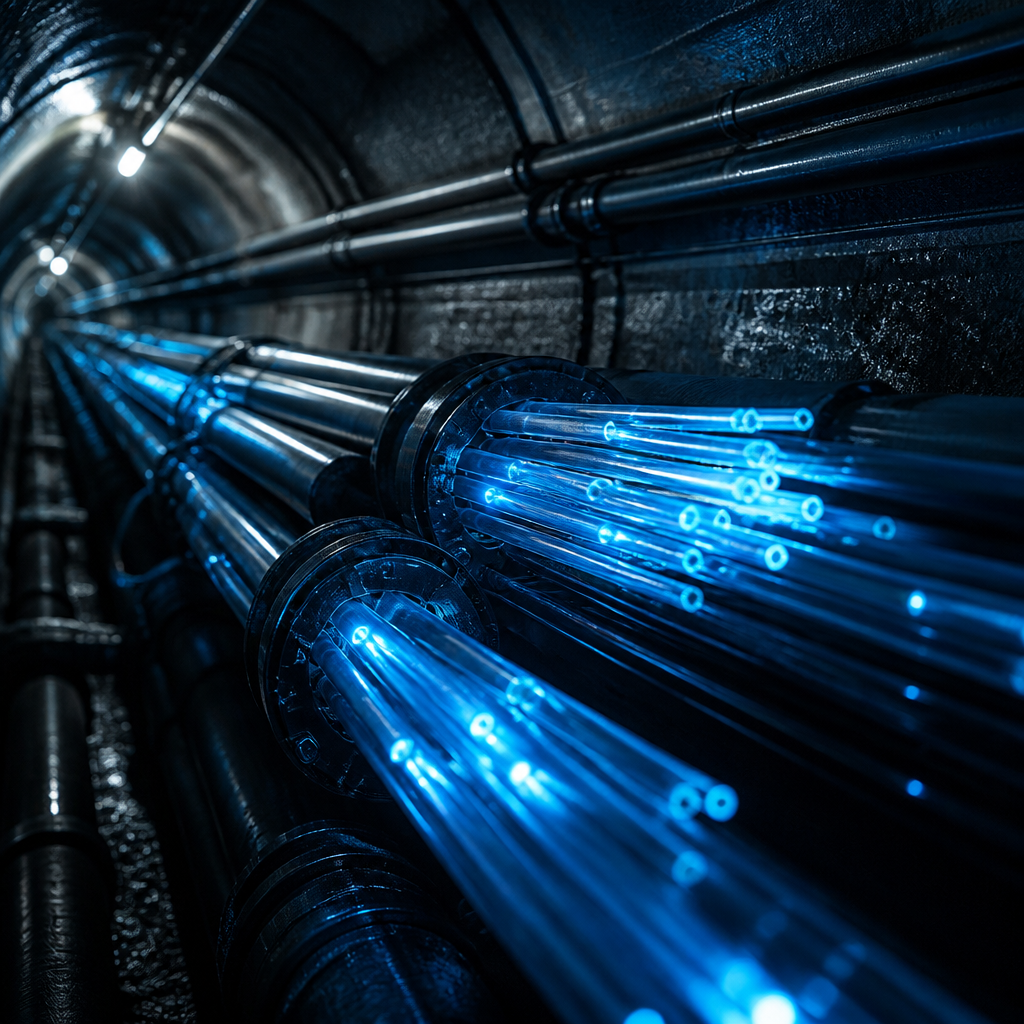
Modern enterprise growth is built upon invisible threads. While much of the conversation around cybersecurity focuses on the application layer, the encryption protocols, and the cloud interface, the physical layer—the literal glass fibers buried under city streets and laid across ocean floors—remains the most vulnerable yet overlooked component of the global stack.
Dark fiber, the unlit optical fiber cables available for lease, offers businesses unparalleled control over their bandwidth and latency. However, this autonomy comes with a significant burden: the responsibility for securing the physical and logical integrity of the infrastructure. As Gpenda Technologies Inc. helps organizations modernize their networks, we have seen an increasing shift toward private fiber ownership, making the security of these assets a top-tier operational priority.
Understanding the Dark Fiber Vulnerability
Dark fiber is often perceived as inherently secure because it is "private." Unlike public internet transit, your data isn't hopping through multiple third-party routers. However, this private nature can lead to a false sense of security. The risks to subsea and terrestrial fiber are both physical and technical.
1. Physical Interception and Tapping
It is a common misconception that fiber optic cables cannot be tapped. While significantly harder to compromise than copper wiring, optical tapping is a reality. Using a process called "macrobending," an intruder can slightly bend the glass fiber enough to cause light leakage without breaking the connection. This leaked light can be captured by a sensitive photo-detector, allowing the attacker to clone the data stream without the sender or receiver ever knowing there was a breach.
2. The Subsea Bottleneck
Subsea cables carry over 95% of international data traffic. These assets are vulnerable to both state-sponsored sabotage and accidental damage from anchor drags or fishing trawlers. While a break in a cable causes a service outage, a sophisticated intercept at a landing station or a repeater can lead to massive, undetectable data exfiltration at a sovereign scale.
3. Signal Jamming and Physical Destruction
Terrestrial fiber follows predictable paths—often alongside railways or pipelines. For organizations relying on dark fiber for high-frequency trading or real-time industrial control systems, a physical cut doesn't just stop data; it stops revenue. Intentional destruction of fiber hubs is a growing concern for critical infrastructure resilience.
Strategies for Hardening Infrastructure Assets
Securing these assets requires a multi-layered approach that bridges the gap between traditional IT security and physical asset management.
Optical Intrusion Detection Systems (OIDS)
To counter the threat of macrobending and tapping, organizations are deploying OIDS. These systems use laser interferometry to monitor the physical integrity of the fiber strand in real-time. If the cable is touched, moved, or bent, the resulting vibration or light loss triggers an immediate alert. This allows security teams to identify the exact geographic location of a potential tap within meters.
Data-in-Motion Encryption
Never assume the physical layer is secure. Gpenda Technologies Inc. recommends that all data traversing dark fiber be encrypted at Layer 1 (the physical layer) or Layer 2 (the data link layer). By using wire-speed encryption, businesses can ensure that even if an attacker successfully taps the fiber, the captured light yields nothing but indecipherable noise. This is particularly critical for complying with global frameworks like GDPR and PIPEDA, which demand rigorous protection of personal data across all transit paths.
Path Diversity and Redundancy
True resilience isn't just about preventing a breach; it's about ensuring continuity. Organizations should utilize "geographically diverse" paths. This means ensuring that your primary and backup fiber lines do not share the same physical trench or landing station. A single construction accident or localized flood should never be able to take down both your primary and redundant links.
The Role of Landing Station Security
For subsea assets, the landing station—where the cable emerges from the ocean to connect to terrestrial networks—is the most critical point of failure. These facilities must be treated with the same level of security as a Tier IV data center. This includes:
- Zero Trust Access: Implementing strict biometric and multi-factor authentication for any physical access to the fiber distribution panels.
- Video Analytics: Using AI-driven surveillance to detect unauthorized loitering or tampering near cable entry points.
- Hardened Infrastructure: Ensuring landing stations have independent power supplies and are protected against environmental hazards.
Global Regulation and Compliance
As governments worldwide recognize fiber as "Critical Information Infrastructure," new regulations are emerging. Whether it is the NIS2 Directive in Europe or various national security mandates in North America and Asia, the requirement to report physical breaches of infrastructure is becoming law. Securing dark fiber is no longer just a best practice; it is a compliance mandate for any global enterprise.
Actionable Takeaways for IT Leaders
- Audit Your Physical Path: Request detailed maps from your fiber provider. Ensure your "redundant" lines don't converge at a single bridge or tunnel.
- Implement MACsec: Use Media Access Control Security (IEEE 802.1AE) for point-to-point security on Ethernet links to provide hardware-level encryption.
- Monitor Light Levels: Use network management tools to monitor for "decibel loss." A sudden, unexplained drop in signal strength is often the first sign of a physical tap.
- Collaborate with Managed Partners: Work with infrastructure specialists who understand the intersection of physical security and network architecture.
Conclusion
The move toward dark fiber represents a significant step forward in network performance and sovereignty. However, the physical reality of these assets cannot be ignored. By treating the glass itself as a vulnerable endpoint, organizations can build a truly resilient foundation for their global operations. Securing the dark fiber risk is the next frontier for the modern CISO, ensuring that the invisible threads connecting our world remain unbroken and unobserved.